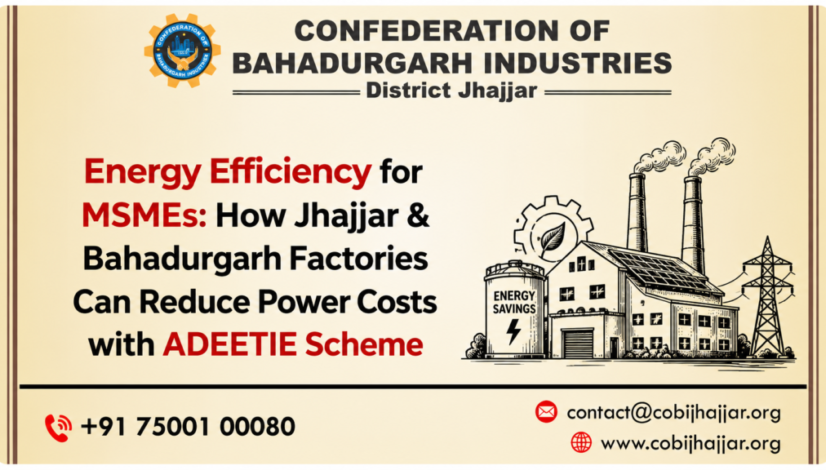
Energy Efficiency for MSMEs: How Jhajjar & Bahadurgarh Factories Can Reduce Power Costs with ADEETIE Scheme
Table of Contents
- Why Energy Efficiency for MSMEs Matters for Jhajjar & Bahadurgarh
- What the ADEETIE Scheme Offers to MSME Units
- Energy Efficiency for MSMEs: Practical Factory Upgrades
- How to Start with an Energy Audit and DPR
- Who Can Benefit from ADEETIE in 2026
- Cost-Saving Checklist for Local Factories
- Final Thoughts
Why Energy Efficiency for MSMEs Matters for Jhajjar & Bahadurgarh
Energy Efficiency for MSMEs is no longer a good-to-have idea; it has become a direct profit-protection strategy for factories in Jhajjar and Bahadurgarh. For many manufacturing units, electricity, diesel backup, compressors, motors, boilers, furnaces, pumps, lighting and cooling systems quietly consume a large part of monthly operating cost. When these systems run on outdated technology or poor maintenance, the factory pays more for the same output every day.
The local industrial ecosystem is already competing with units from Delhi-NCR, Gujarat, Punjab, Rajasthan and other manufacturing hubs. In this situation, Energy Efficiency for MSMEs gives factory owners a practical way to reduce power bills without reducing production. A unit that saves energy can price better, manage margins better and become more attractive to buyers who now prefer sustainable suppliers.
For COBI members and industrialists in Bahadurgarh, the real question is simple: if the same production can happen with less electricity, why should a factory keep paying extra? This is where the ADEETIE Scheme becomes important.
Energy Efficiency for MSMEs and the ADEETIE Scheme in 2026
Energy Efficiency for MSMEs has received strong policy support through the Assistance in Deploying Energy Efficient Technologies in Industries & Establishments, commonly known as the ADEETIE Scheme. The scheme is implemented by the Bureau of Energy Efficiency under the Ministry of Power and is designed to help MSMEs adopt energy-efficient technologies through technical and financial support.
According to government announcements, ADEETIE has a budgetary outlay of Rs. 1,000 crore and supports eligible MSMEs through interest subvention, investment-grade energy audits, detailed project reports and monitoring after implementation. A news report by Economic Times Energyworld also highlighted that the scheme aims to encourage energy-smart MSMEs through concessional support and phased cluster-based implementation. Read Economic Times Energyworld coverage
The scheme offers 5% interest subvention for Micro and Small Enterprises and 3% interest subvention for Medium Enterprises on eligible loans for energy-efficiency projects. For many factory owners, this can make machinery replacement, motor upgrades, efficient compressors or heat-recovery systems easier to finance.
For a broader understanding of the institution behind India’s efficiency programmes, readers can also refer to the Bureau of Energy Efficiency overview on Wikipedia. Read about Bureau of Energy Efficiency on Wikipedia
How Energy Efficiency for MSMEs Reduces Factory Power Costs
Energy Efficiency for MSMEs works because it attacks waste at the source. In many factories, the issue is not only the electricity tariff; it is the way electricity is used. Air leakage in compressed-air lines, oversized motors, old pumps, poor insulation, inefficient furnaces, unplanned machine loading and low power factor can all increase the final power cost per product.
A small unit may think that saving 5% or 10% is not enough, but for a factory running every day, even modest improvement becomes meaningful. If a unit spends Rs. 5 lakh per month on electricity, a 10% saving can mean Rs. 50,000 per month. Over one year, that is Rs. 6 lakh saved without changing the core product line.
That is why Energy Efficiency for MSMEs should be seen as a production strategy, not only an environmental activity. The factory owner gets lower costs, the buyer gets a more reliable supplier, and the industrial area moves toward cleaner growth.
Energy Efficiency for MSMEs: Best Upgrade Areas for Local Factories
Jhajjar and Bahadurgarh have a mixed industrial base including engineering, packaging, footwear, plastics, metal work, food processing, fabrication and allied manufacturing. Each sector uses energy differently, but the improvement areas are often similar.
1. Motors, Pumps and Compressors
Energy Efficiency for MSMEs often starts with motors and compressors because they run for long hours. Replacing inefficient motors with high-efficiency motors, repairing compressed-air leakages and using variable frequency drives where load varies can deliver visible savings.
2. Boilers, Furnaces and Heating Systems
Units using heat for processing should check insulation, burner efficiency, fuel-air ratio, temperature control and waste-heat recovery. Energy Efficiency for MSMEs in thermal systems can reduce fuel consumption and improve process consistency.
3. Lighting, Cooling and Ventilation
LED lighting, daylight usage, efficient fans, better ventilation design and automatic controls may look basic, but they reduce avoidable load. For small factories, these are often low-cost entry points into Energy Efficiency for MSMEs.
4. Power Factor and Load Management
Poor power factor, unbalanced load and peak-time wastage can increase electricity cost. Proper capacitor banks, monitoring meters and production scheduling can support Energy Efficiency for MSMEs without major disruption.
How to Start Energy Efficiency for MSMEs with an Audit and DPR
The first step is not buying new machinery blindly. The first step is measurement. A factory should begin with an energy audit that studies connected load, actual usage, production output, running hours, machine efficiency, leakages and maintenance practices.
Under ADEETIE, eligible units can get support for Investment Grade Energy Audits and Detailed Project Reports. These reports help identify which upgrade will save energy, how much investment is needed, what the payback period may be and whether the project can qualify for loan-based support.
This makes Energy Efficiency for MSMEs more bankable. Instead of giving a bank a vague request for machinery finance, the unit can present a clear DPR showing expected energy savings, technical scope and repayment logic. This improves confidence for both the factory and the lender.
Eligibility Angle: Who Should Explore Energy Efficiency for MSMEs Under ADEETIE?
Factories should explore Energy Efficiency for MSMEs under ADEETIE if they have a valid Udyam registration, operate in an eligible energy-intensive sector or cluster, and are planning technology upgrades through loans from banks or financial institutions. The scheme is especially useful for units where electricity or fuel cost forms a high share of production cost.
Typical beneficiaries may include fabrication units using motors and welding machines, food-processing units using heating and cooling, packaging units using compressors and printing equipment, metal units using furnaces, and textile or leather-related units using process machinery.
Even if a unit is not immediately ready for a loan, it can still begin by collecting energy bills, machine details, operating hours and production data. This preparation makes future participation easier when the right window opens.
Energy Efficiency for MSMEs: Practical Checklist for Jhajjar & Bahadurgarh Factories
Before applying for any support, factory owners should make a simple internal checklist. Keep the latest electricity bills, Udyam certificate, GST details, machinery list, load details, production data and maintenance records ready. Also note which machines run continuously and which machines create frequent breakdowns.
Next, identify quick wins. Repair compressed-air leakages, replace old lights, correct power factor, clean filters, service motors, check insulation and train operators to switch off idle machines. These steps build discipline before larger investments.
Finally, plan the capital upgrades. Energy-efficient motors, VFDs, efficient boilers, heat recovery, improved compressors, efficient pumps and digital energy meters can be considered after technical evaluation. This is where Energy Efficiency for MSMEs becomes a structured roadmap rather than a random purchase.
Role of COBI in Promoting Energy Efficiency for MSMEs
Industry associations can make government schemes easier to understand. COBI already works as a bridge between industrialists and authorities in Jhajjar district. Through awareness sessions, member communication, grievance support and policy updates, COBI can help local units understand opportunities connected with Energy Efficiency for MSMEs.
Industrialists can follow more practical updates through the COBI Knowledge Series. COBI Knowledge Series Units that want to stay connected with association-level activities, support and industrial updates can also visit the official COBI website. COBI home page
Final Thoughts on Energy Efficiency for MSMEs in 2026
Energy Efficiency for MSMEs is one of the most practical ways for Jhajjar and Bahadurgarh factories to reduce power costs, improve margins and prepare for a more competitive manufacturing future. The ADEETIE Scheme makes this opportunity stronger because it connects technical audits, DPR support and interest subvention in one framework.
The factories that act early will not only save electricity; they will also build stronger financial discipline, better production reliability and a greener brand image. In 2026, Energy Efficiency for MSMEs should not be treated as a compliance burden. It should be treated as a smart investment in long-term industrial growth.