TReDS & MSME ODR Portal: How Jhajjar & Bahadurgarh Industries Can Recover Delayed Payments Faster in 2026
For many factories in Jhajjar and Bahadurgarh, delayed payments are not just an accounting issue. They affect raw material purchase, labour payments, electricity bills, bank limits and production planning. When a buyer delays payment for weeks or months, even a profitable MSME can face a cash flow shortage. This is why TReDS & MSME ODR Portal awareness has become important for industrial units in 2026.
TReDS & MSME ODR Portal gives businesses two practical routes. TReDS supports invoice discounting and quicker working capital access, while the MSME ODR Portal supports online dispute resolution for delayed payment cases. For local manufacturers, fabricators, packaging units, engineering units and service providers, understanding both systems can reduce financial pressure and improve payment discipline.
Table of Contents
- Why delayed payments hurt MSME factories
- What is TReDS & MSME ODR Portal?
- How TReDS improves MSME cash flow
- How the MSME ODR Portal supports recovery
- Eligibility and document checklist
- Step-by-step action plan for local industries
- Common mistakes to avoid
- FAQs
Why Delayed Payments Are a Serious MSME Cash Flow Challenge
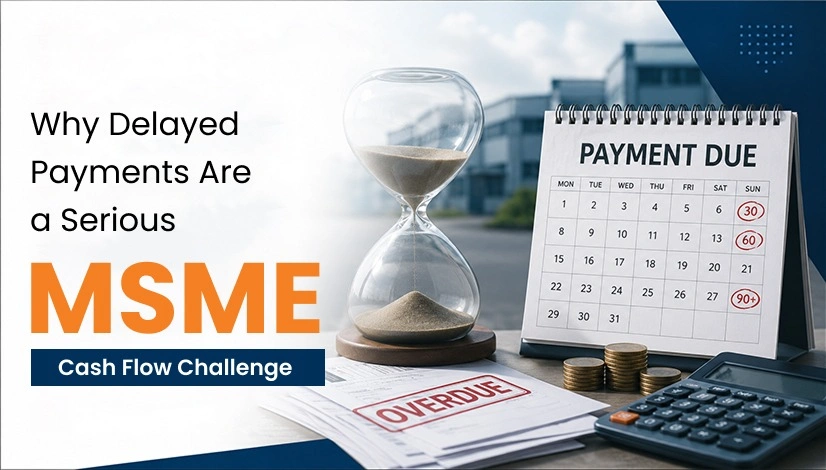
Delayed payment is one of the most common problems faced by MSMEs across India. In industrial belts such as Bahadurgarh and Jhajjar, many units supply goods to large companies, traders, government buyers, contractors, exporters or OEMs. Payment delays disturb the entire business cycle. A factory may complete production, pay vendors, handle freight and deliver the order, but the money remains blocked in receivables.
This is where TReDS & MSME ODR Portal can help. Instead of depending only on follow-up calls or repeated visits to a buyer’s office, MSMEs can use structured digital routes.
What is TReDS & MSME ODR Portal?
TReDS stands for Trade Receivables Discounting System. It is a digital platform where MSMEs can convert accepted invoices into quicker cash through financiers. The Reserve Bank of India describes TReDS as an electronic platform for facilitating the financing or discounting of MSME trade receivables through multiple financiers. Sellers, buyers and financiers participate in the process.
The MSME ODR Portal is designed for online dispute resolution related to delayed payment matters. The MSME Samadhaan portal now directs new delayed payment applications to the MSME ODR Portal. Together, TReDS & MSME ODR Portal can help industries manage two different situations: one where an accepted invoice can be financed, and another where a payment dispute needs structured resolution.
How TReDS & MSME ODR Portal Helps MSMEs Recover Faster
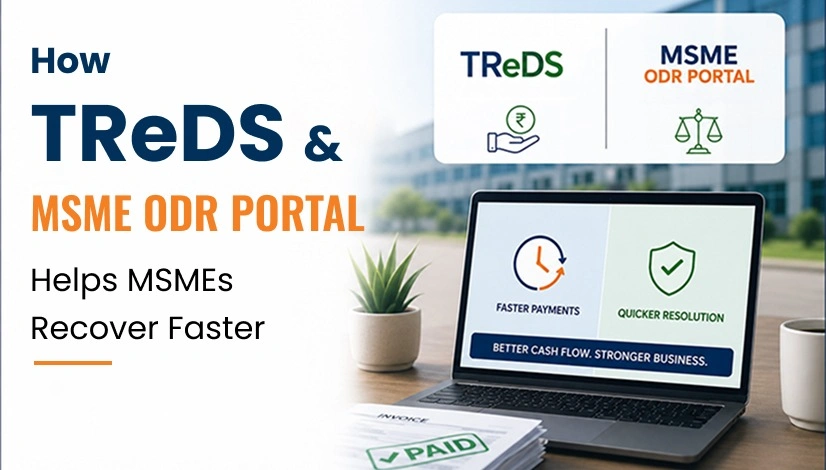
TReDS & MSME ODR Portal Converts Receivables into Better Cash Flow
The first advantage of TReDS & MSME ODR Portal is improved liquidity. Through TReDS, an MSME can upload an invoice raised against an eligible buyer. Once accepted, financiers can bid to discount the invoice. The MSME receives funds earlier instead of waiting for the buyer’s original payment cycle.
This is useful for units supplying to corporates, PSUs, government departments or large buyers. According to coverage in The Economic Times, policy and regulatory changes around TReDS are being positioned to strengthen MSME liquidity infrastructure in India. For Jhajjar and Bahadurgarh industries, TReDS & MSME ODR Portal is a practical cash-flow topic, not just a finance term.
TReDS & MSME ODR Portal Creates a Digital Dispute Route
If a buyer delays payment beyond the allowed period and normal follow-up does not work, the MSME ODR Portal offers a digital route to pursue delayed payment matters.
Online dispute resolution can reduce time, travel and paperwork compared to traditional offline processes. It also gives the enterprise a more organised way to submit invoices, purchase orders, delivery proof, communication records and payment details.
Why Jhajjar & Bahadurgarh Industries Should Pay Attention in 2026
Jhajjar and Bahadurgarh have a strong industrial base with manufacturers, job-work units, packaging companies, engineering firms, metal units, auto component suppliers, plastic units and service providers. Many of these businesses work on credit cycles. When payment cycles stretch, owners often use overdrafts, informal borrowing or vendor credit to keep operations running.
The TReDS & MSME ODR Portal topic is directly connected with local industrial growth. Faster receivable conversion can help units purchase raw material on time, avoid production stoppage, pay employees without stress and reduce dependency on expensive short-term finance. A Times of India report in 2026 also highlighted delayed payments as a major MSME issue affecting financial stability and employment.
Eligibility and Documents Needed for TReDS & MSME ODR Portal
Eligibility for MSME Sellers
For TReDS, the seller must be an MSME and the buyer should be onboarded or eligible on a TReDS platform. For delayed payment filing through the MSME route, the supplier is generally required to be a micro or small enterprise with valid Udyam registration. The claim should relate to goods supplied or services rendered to the buyer.
Document Checklist for TReDS & MSME ODR Portal
Before using TReDS & MSME ODR Portal, factories should keep these documents ready:
- Udyam Registration Certificate
- GST registration and PAN details
- Purchase order or work order
- Tax invoice and e-invoice, if applicable
- Delivery challan or proof of service completion
- Buyer acceptance or goods receipt note
- Payment terms mentioned in PO, agreement or invoice
- Ledger statement and outstanding amount details
- Email, WhatsApp or written follow-up records
Proper documentation can make the TReDS & MSME ODR Portal process stronger and reduce rejection or delay.
Step-by-Step Action Plan for Local MSMEs
Step 1: Review Outstanding Receivables
Start by preparing a receivable ageing report. Divide dues into 0-30 days, 31-45 days, 46-90 days and above 90 days. This helps identify which invoices can be followed up, financed or escalated.
Step 2: Check TReDS Possibility
For accepted invoices from eligible buyers, explore TReDS platforms. Compare discounting cost, onboarding requirements, buyer participation and processing timelines. TReDS & MSME ODR Portal should be seen as complementary tools: use TReDS for liquidity and ODR for unresolved disputes.
Step 3: Strengthen Buyer Communication
Before escalation, send professional reminders with invoice number, due date, amount, delivery proof and payment terms. A clear email trail can support your case later.
Step 4: Use MSME ODR Portal for Delayed Payment Cases
When normal follow-up fails, the MSME ODR Portal may help micro and small enterprises file delayed payment matters digitally. The MSME Samadhaan website states that all new delayed payment applications will now be filed at the MSME ODR Portal.
Common Mistakes MSMEs Should Avoid
The TReDS & MSME ODR Portal process becomes weaker when documentation is incomplete. Avoid informal supply without purchase orders, vague payment terms, missing delivery proof, delayed invoice generation and poor follow-up records. TReDS & MSME ODR Portal works better when buyer onboarding, invoice acceptance and platform understanding are planned in advance.
Conclusion
Delayed payments can slow down even well-managed factories. For Jhajjar and Bahadurgarh industries, TReDS & MSME ODR Portal offers a practical way to manage receivables, improve working capital and act against unresolved payment delays. The key is to stay prepared: maintain documents, track receivables, follow up professionally and use the right digital platform at the right stage.
In 2026, MSMEs that treat payment recovery as a structured process will be stronger than those depending only on verbal follow-ups. TReDS & MSME ODR Portal awareness can help local industries protect cash flow and build more resilient businesses.
FAQs on TReDS & MSME ODR Portal
What is the main benefit of TReDS & MSME ODR Portal?
The main benefit of TReDS & MSME ODR Portal is better receivable management. TReDS helps MSMEs get early payment against accepted invoices, while the MSME ODR Portal helps with online resolution of delayed payment disputes.
Can every MSME use TReDS?
Only MSMEs can participate as sellers on TReDS, and the invoice usually depends on buyer acceptance and platform eligibility. MSMEs should check onboarding requirements with recognised TReDS platforms.
Who can file delayed payment cases on MSME ODR Portal?
Micro and small enterprises with valid Udyam registration can generally file delayed payment matters related to goods supplied or services rendered, subject to portal rules and required documents.
Is TReDS & MSME ODR Portal useful for Bahadurgarh factories?
Yes. TReDS & MSME ODR Portal is useful for Bahadurgarh and Jhajjar factories because many local units operate on credit cycles and need better systems to manage payment delays.